High Temperature Dishwasher Explained: 180°F, 150°F and Your Viking
A high temperature dishwasher sanitizes with heat: restaurant machines rinse at 180°F or hotter, while a home model's sanitize cycle must finish with a 150°F rinse. Here is how to check a Viking's heat and what to do when it falls short.
- Written by
- Arthur Benedetti
- Experience
- 12 years
- Position
- Service technician — dishwashers and drainage
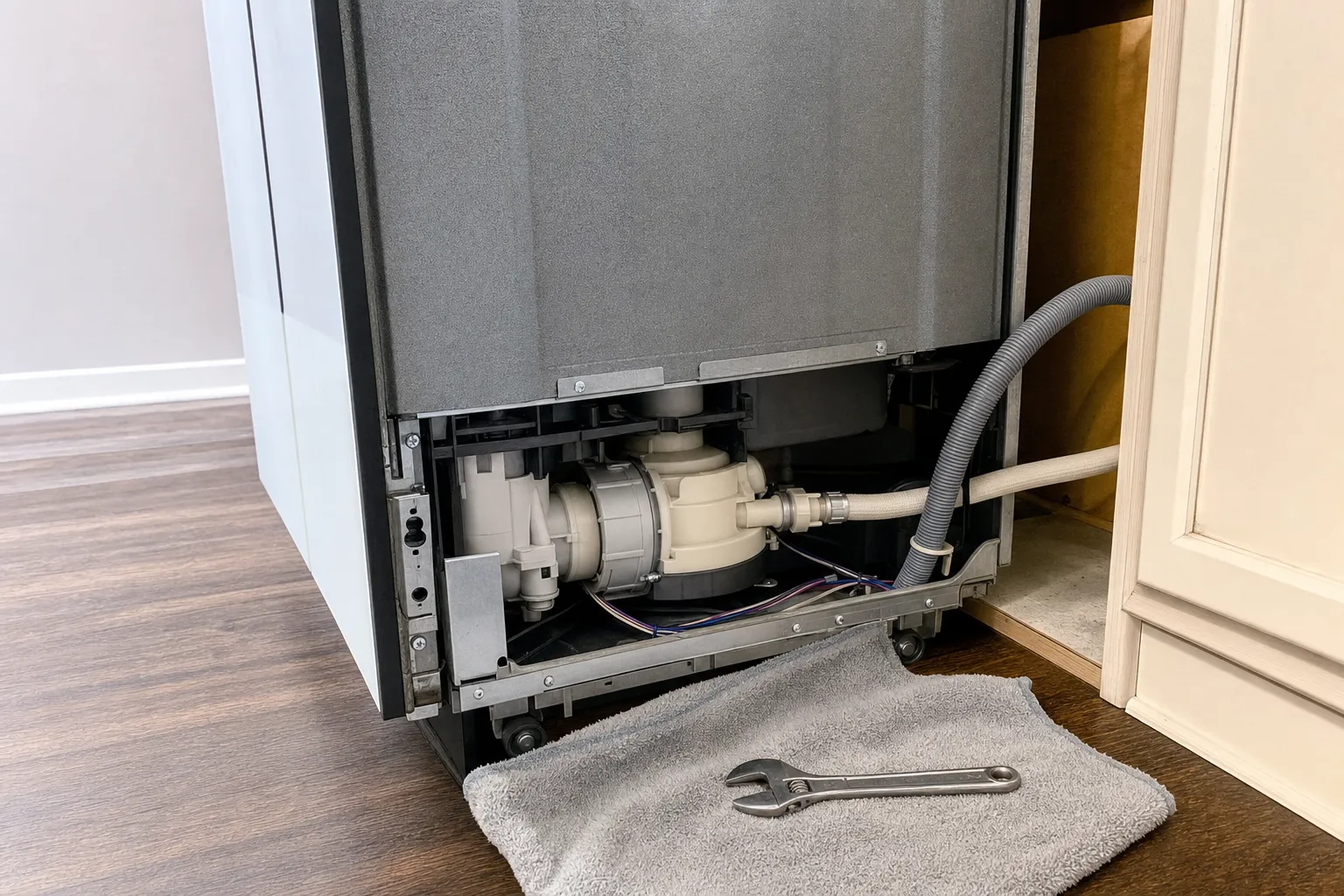
A high temperature dishwasher is one that kills germs with hot water instead of a chemical rinse. In a restaurant that means a final rinse of at least 180°F, usually supplied by a booster heater. In a house the bar comes from NSF/ANSI 184, which asks a residential machine’s sanitizing cycle to finish with a 150°F rinse and wipe out 99.999 percent of bacteria. So a home unit counts as high temperature when its sanitize program reliably reaches that 150°F mark. For a Viking owner in Downtown Bothell or Canyon Park, the useful questions are what your machine ought to reach, why it sometimes falls short, and how to measure it yourself before you book anyone.
Two kinds of machine share one name
Most search results describe restaurant equipment, which muddles the answer. Three machines are in play:
| Machine | Final rinse | How it sanitizes |
|---|---|---|
| Commercial high-temp (door, conveyor or undercounter) | 180°F or hotter | Heat alone, lifted by a booster heater |
| Commercial low-temp | Around 120°F | Chlorine or a similar chemical |
| Residential with a sanitize cycle | 150°F under NSF/ANSI 184 | Heat, on the sanitizing program only |
The commercial units, including the undercounter high-temp models sold to bars and cafés, need a heavy dedicated electrical circuit and a booster that raises tap water by roughly 40 degrees on its way to the rinse arms. Low-temp commercial machines, often leased to restaurants with the chemical supply bundled in, run cooler and rely on chlorine instead. Neither belongs in a family kitchen.
A home dishwasher plays by a gentler rule. The 150°F figure applies only while the machine runs its sanitizing program; a normal or eco cycle can stay well below it and still clean dishes, because detergent enzymes do most of that work at moderate heat. That is the honest answer for a Viking owner: if your model offers a sanitize option, it is a high temperature machine in the residential sense when that option is selected and the water truly gets there.
Where the heat comes from, and the hottest spot inside
Your water heater does the first part of the work. Most dishwashers expect water at about 120°F at the kitchen sink, and the machine’s own heater adds the rest during the main wash and the last rinse. The hottest part of any dishwasher is that heater, either an element lying in the tub floor or a heater hidden in the water path under the tub, and it runs far hotter than the water it warms. Of the water itself, the final rinse is the hottest stage, because that is when a sanitize program pushes the temperature up and holds it there.
That heat matters beyond germs. A hot last rinse leaves dishes warm enough for water to flash off them, which is why a weak heater often shows up first as wet glasses and spotting. On Viking’s VDWU and FDWU panel-ready models, rinse aid helps with the drying: the dispenser has settings from P:0 to P:4 and ships set to 3. Move it up one step if glasses come out stained, and back down if a bluish film wipes away under your finger.
Why the readings drift
- Cold supply water. In a Bothell winter the cold main runs far colder than in August, and a water heater turned down to save energy can send lukewarm water for the first fill. The dishwasher’s heater then has more ground to cover, and the machine either stretches the cycle or finishes short of its target.
- A long pipe run. When the kitchen sits at the far end of the house from the water heater, the first fill can be mostly water that cooled while sitting in the line. Running the sink hot before you press start costs nothing and fixes it.
- The wrong program. Quick and eco cycles are designed to run cooler. Only the sanitizing program is held to the 150°F rinse.
- Packed filters. Viking asks owners to clean the filters at least once a week. A clogged filter starves the pump, less water moves past the heater, and the wash comes out cooler and weaker. On VDWU and FDWU machines, turn the micro and coarse filter assembly counterclockwise, lift it out, remove the flat filter, scrub all three under the tap and seat them again until they click.
- A failing heater, sensor or control. The temperature sensor reports to the control board; when it reads wrong, the board stops heating early or never starts. These faults cannot be fixed from the sink.
Checking the temperature with a thermometer
You need an instant-read cooking thermometer with a probe; a candy thermometer works as well.
- Run the kitchen hot tap for a minute, fill a glass and measure it. Around 120°F is what you want. If it is much lower, the water heater or the pipe run is your first suspect.
- Start the sanitizing program with the machine empty or lightly loaded.
- Watch the time remaining. Once the main wash has drained and the machine has refilled for its final rinse, pause it and open the door slowly, since steam rolls out fast.
- Dip the probe into the water pooled in the sump at the bottom of the tub for a few seconds, keeping your hand clear of the heater. Then close the door and let the cycle finish.
Expect the number to land a few degrees under the true figure, because opening the door dumps heat. A reading within several degrees of 150°F on a sanitize cycle is normal; one barely above your tap water means the heater is not pulling its weight.
When the heat will not hold
Work through the free checks first: hot water at the sink, the sanitizing program selected, clean filters. If the display flashes a code, read it before blaming the heater. On VDWU and FDWU machines, E:02 means the water supply was cut off, and on the VDWU724 and FDWU724 the program simply pauses until water returns. E:01 points to overfilling or a leak, and the machine will try to pump itself out. Neither is a temperature fault, and an E:01 that keeps returning needs a technician.
If those checks pass and the rinse still comes up cool, the likely causes are the heater, the temperature sensor or the control that runs them. Viking Repair Bothell charges one flat $89 to come out and pin down exactly what failed; say yes to the fix and that $89 is credited against it in full. As typical ranges, with the firm quote following diagnosis: a dishwasher pump or control repair runs $190–$390, and a control board or touch panel $420–$600. Warranty age matters too. From the third year through the fifth, Viking supplies only listed dishwasher parts, and the owner covers labor and shipping.
Our Viking dishwasher repair page explains how panel-ready units are handled, and the parts overview follows each component in the order water reaches it. If the cabinet opening is tight, read what clearance a Viking dishwasher needs for service before the appointment, or call (206) 202-2799.
Asked after reading this
What is the hottest part of a dishwasher?
The heater is the hottest part, whether it is an element on the tub floor or one tucked into the water path beneath the tub. It runs much hotter than the water around it, so give the machine several minutes to cool before reaching into the bottom after a cycle.
Is a home sanitize cycle as hot as a restaurant dishwasher?
No, a restaurant high-temp machine rinses at 180°F or above, while a residential sanitizing cycle under NSF/ANSI 184 targets a 150°F final rinse. The home standard still demands a 99.999 percent cut in bacteria, so it is a genuine sanitizing benchmark, just matched to household wiring and plumbing.
Should I put an undercounter high-temp commercial dishwasher in my kitchen?
For nearly every home the answer is no. Undercounter commercial units want a heavy dedicated electrical circuit and usually a booster heater, they are loud, and they are built for two-minute cycles rather than for hiding behind a custom cabinet panel. A residential machine run on its sanitizing program is the better fit.
What water temperature should reach my dishwasher?
Aim for roughly 120°F at the kitchen sink. Cooler supply water makes the dishwasher's own heater cover the gap, which stretches cycles and can leave the final rinse short of its target.
dishwashertemperaturesanitizeviking